Blog

Article
What Is Self-discharge and ...

What Is Self-discharge and Leakage Current?

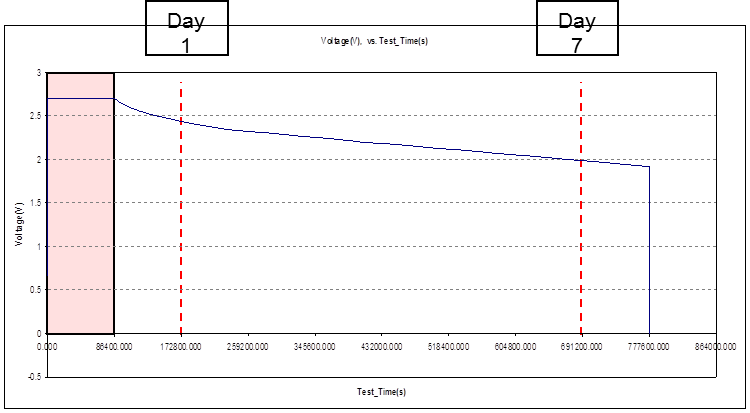
Over time, charged ultracapacitors without a load slowly lose their charge. “Self-discharge” is the voltage drop a charged ultracapacitor cell experiences after a set period of time without a load.

Self-discharge

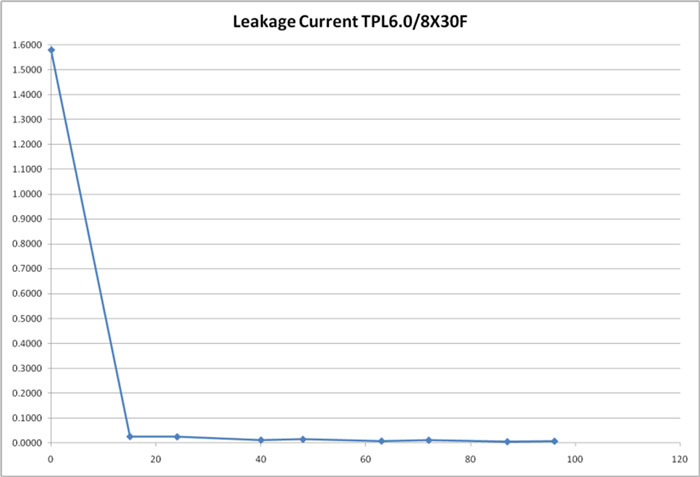
Ultracapacitors require a current to keep them charged. The leakage current is the stable parasitic current needed to hold an ultracapacitor on charge at a rated voltage. The value needed for the leakage current is voltage- and temperature-dependent.

Other Recent Posts

Tecate Group Announces New Ultracapacitor Cells Rated for Operation up to 105°C (221°F)

Tecate Adds to Its Already Extensive Product Lineup With New High-Temperature-Capable Ultracapacitors Cells San Diego, CA: June 1, 2026. Tecate Group today announced the expansion...

Read post

What Is Equivalent Series Resistance (ESR)?

Equivalent series resistance (ESR) is a measurement of internal resistance in an energy-storage device and is specified in ohms (Ω). Internal resistance influences the flow of electrical energy through the device and...

Read post